


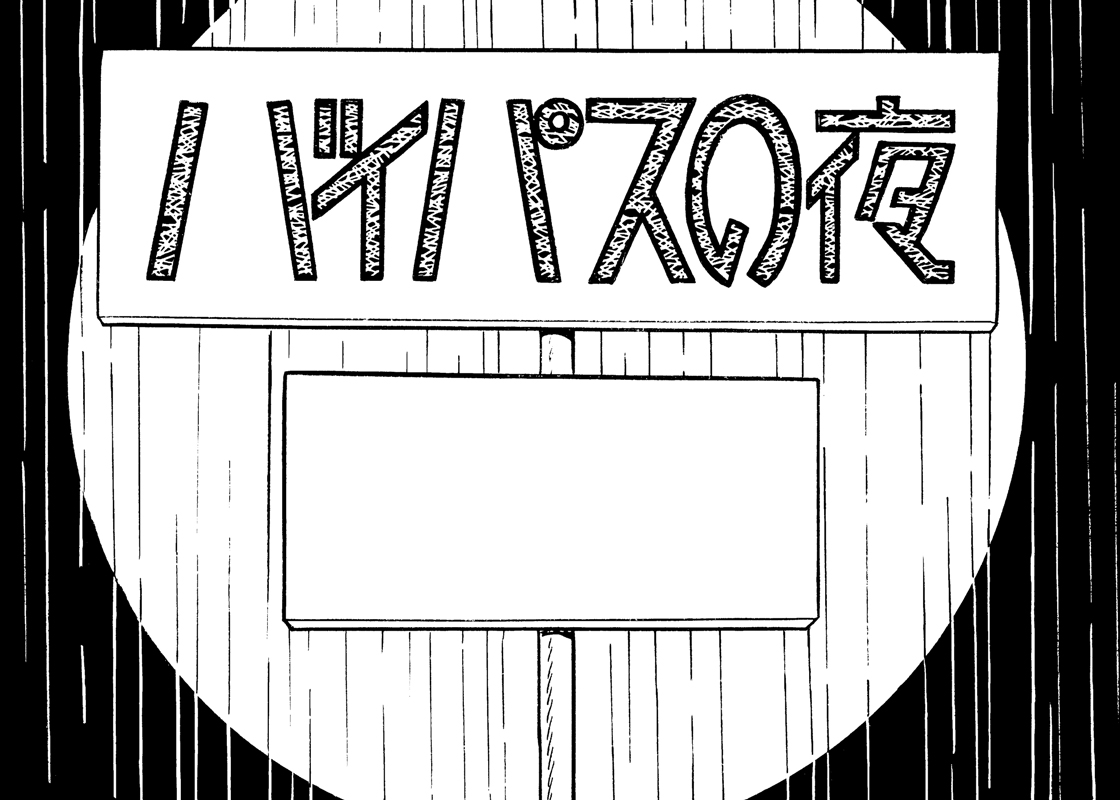
Night on the Bypass
1969/10/10


STORY
This is a suspenseful horror story centered around the terror found in everyday life, set in a taxi on a rainy night. A taxi driver and a passenger reveal the crimes they have committed against each other. Are these confessions genuine, or merely lies?
A taxi crosses a dark mountain pass. Inside the taxi are the driver and a passenger, and the entire story unfolds through their conversation. The passenger, who appears to have committed a crime, is eager to confess to someone and keeps talking to the unfriendly driver, who remains unresponsive. Once the passenger reveals what he has done, an odd sense of solidarity develops between the two. Soon after, the driver starts disclosing the crime he has just committed.

DESCRIPTIONS
1969/10/10 Appeared in Shukan Post (Shogakukan)
The first half of this story is charged with tension. It opens on an unsettling note, with a taxi being hailed before dawn, and the only characters are a confrontational passenger and a driver whose thoughts are impossible to read. To make matters even more unnerving, each claims to be a criminal, and there is no way of knowing whether either of them is telling the truth. (Even the rain that begins to fall along the way somehow adds to the cinematic atmosphere.)
In the second half, the mood shifts completely as the two suddenly begin to warm to each other, skillfully releasing the tension that has been building throughout. Yet there is one more unexpected turn at the very end. What happens to the two? The story cuts off abruptly, leaving readers to imagine the answer for themselves—an exceptionally stylish way to bring it to a close.
One small detail is also worth noting: the seemingly casual mention in the first half that the taxi is a privately owned and operated one actually serves as clever foreshadowing for the ending.
The term “kumosuke” used in the story dates back to the Edo period. It refers to unscrupulous taxi drivers who charged passengers exorbitant fares and sometimes even resorted to violence. It seems that drivers who drove recklessly or treated passengers in an overbearing manner were not uncommon before 1959, when privately owned taxi services were first officially licensed,
At the time, there was also no easy way to contact someone in an emergency, and once inside a taxi, a passenger was effectively alone with the driver in an enclosed space. The fear of taking a taxi alone late at night may therefore have felt far more immediate and real than it does today.